Gleec Wallet 0.9.5 Brings iOS and Android Releases, TRON Support and Expanded Atomic Swaps

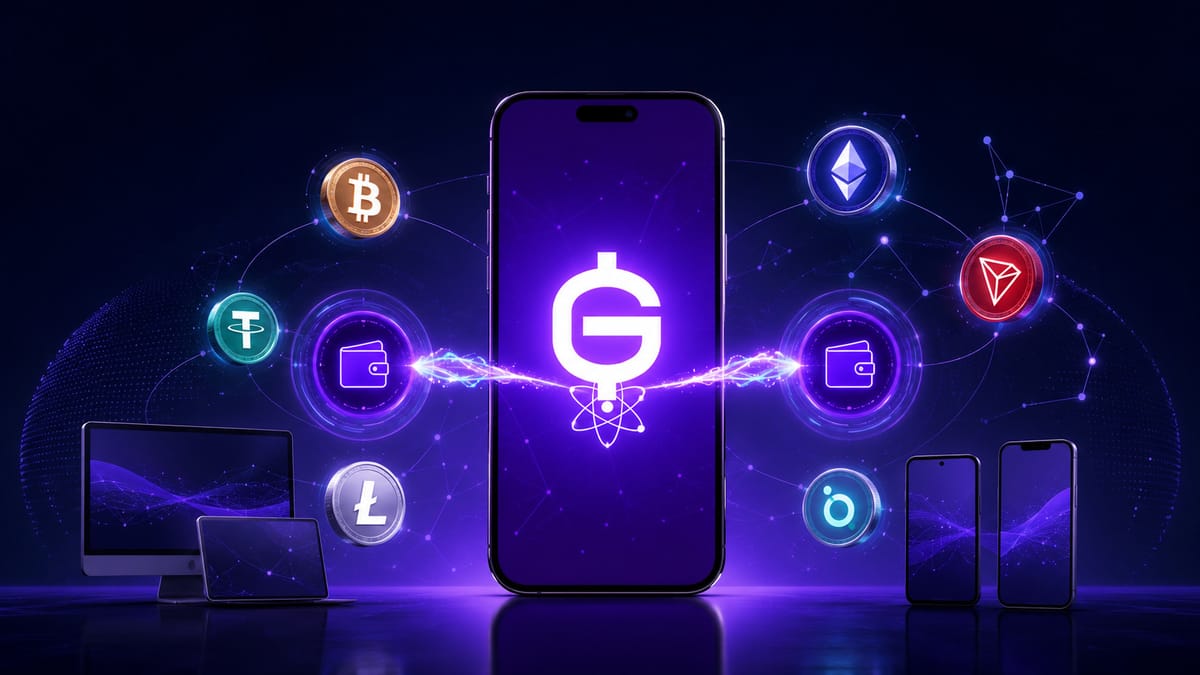
Gleec Wallet’s long-awaited mobile release adds TRON and TRC-20 wallet support, SIA support, USDT-ERC20 swaps and hierarchical deterministic wallet functionality, while moving the project closer to a full cross-platform, non-custodial decentralized exchange experience.
Behind the Release: What It Takes to Ship Gleec Wallet
For anyone who does not know me, I am the person responsible for releases at Gleec. My formal title is Core Software Engineer / Architect, but in practice the role covers a little bit of everything: maintaining internal infrastructure and microservices, wearing DevOps and site reliability engineering (SRE) hats, and keeping an eye on the development process across every major part of our application.
That includes the Komodo DeFi Framework (KDF), the Rust-based core of the product — essentially the backend — as well as the user interface, which is built with Flutter and Dart. The UI side itself consists of two layers: the app interface and komodo-defi-sdk-flutter. I am also the person who stays closest to the latest changes from our excellent development team. Sometimes that means reviewing their work; sometimes it means stepping in directly to fix bugs discovered during testing across different platforms.
And yes, you read that correctly: Gleec Wallet is a genuinely cross-platform application. It runs not only on desktop platforms — Windows, Linux and macOS — and mobile platforms such as Android and iOS, but also as a web version that works directly in the browser.
That breadth comes with real engineering work behind the scenes. During preparation for the macOS release, for example, we discovered that the file-save dialog worked everywhere except macOS because additional permissions were required in the app manifest. In the latest Android release cycle, we found that some libraries used by the project had been built without 16 KB page-size alignment, which meant the app did not meet the requirements for installation on the latest Android 16 environment.
These are the kinds of details that usually stay out of view, but they are part of my everyday work. We have a strong team, and every member is a professional in their area. I will not list everyone by name or catalog each person’s contribution here, but I can say that I am genuinely happy to work with this group. And while, as you have probably noticed, not everything always goes perfectly smoothly, development has not stopped for a minute.
Gleec Wallet 0.9.5 Arrives on Mobile
Today, I am happy to say that the long-awaited Gleec Wallet 0.9.5 mobile release is finally arriving for iOS and Android. In short, the new version introduces TRON and TRC-20 wallet support, USDT-ERC20 swap support, SIA support and hierarchical deterministic (HD) wallet functionality. It also improves multichain asset management, DEX swap flows, wallet usability, GleecDEX branding, performance and overall app stability.
Many of you may remember that back when the project was still known as Komodo Wallet, we never had a full iOS version available through the App Store. It ended at TestFlight. I am glad to say that this has now changed: the iOS app is live on the App Store.
Because this is effectively the first full iOS release, our UI development team did not manage to implement everything that had been planned. In particular, you will likely notice that wallet locking with Face ID on iOS, or biometrics on Android, is not yet available. Work on this is already underway, and it will be addressed in one of the next releases.
Please do not judge the developers too harshly for small bugs. The iOS version, for example, may log the user out when the app loses focus — such as when it is moved to the background or when another app is opened temporarily. I want to reassure everyone that these issues are already in our TODO list, and work on fixing them is in progress.
TRON, TRC-20, SIA and USDT-ERC20 Swaps
Release 0.9.5 adds full support for TRON (TRX) and TRC-20 tokens, though for now only in Wallet Only mode. That means users cannot yet swap these assets inside the app, but this is only a temporary limitation. Work on swap support is also in progress.
Another feature you will see in future releases is Gas Free for TRX, which is designed to let users send USDT-TRC20 even if they do not have enough TRON for gas. More on that later.
This release also adds support for SIA (Siacoin), including swap support, as well as support for USDT-ERC20 swaps, which had not been available in previous versions of the application.
Why Another Wallet or DEX?
If you are reading about Gleec Wallet — or Komodo Wallet, as it was formerly known — for the first time, you might reasonably ask: why do we need another wallet or another decentralized exchange (DEX)? For Ethereum Virtual Machine (EVM) chains, many users already rely on MetaMask or Rabby Wallet, and swap functionality is often built directly into those products.
The answer is straightforward: Gleec Wallet is not only a non-custodial wallet; it is also a full DEX. It supports swaps not only between EVM-based assets, but also between UTXO-based coins such as Bitcoin (BTC), Litecoin (LTC), DASH, ZEC, KMD and many others. More importantly, it supports not only EVM-to-EVM swaps, but also UTXO-to-UTXO and even UTXO-to-EVM routes.
This is made possible by atomic swap technology with roots in Komodo, Komodo Wallet and BarterDEX — if anyone still remembers BarterDEX. What makes this approach distinctive is that it is one of the few DEX models that can operate without intermediaries, without a centralized trading layer and without an intermediate token, while still connecting blockchains that are otherwise very different and seemingly incompatible.
There is a trade-off, however. Supporting a broad range of assets and blockchain architectures comes at a cost, first and foremost in speed. A single swap, for example, can take 20 to 40 minutes, while a comparable transaction on a centralized exchange may take only a few minutes. Because of the decentralized nature of the wallet, users may also occasionally find that certain coins are temporarily unavailable. Gleec Wallet may rely on third-party infrastructure, such as community-run Electrum servers for a given coin, and those servers may sometimes be unavailable.
That can create inconvenience or confusion for users. Even so, the DEX and atomic swap technology used in Gleec Wallet is functional, distinctive and difficult to compare directly with most other wallet-based swap products.
A Trustless OTC Example
Imagine the following situation. You meet someone in Discord whom you do not know at all, and that person proposes an over-the-counter (OTC) trade. For example, they want to swap USDT-BEP20 for KMD. Can you trust them? Most likely not. There are far too many scammers online.
But what if the proposed trade is real? How can two parties complete the exchange if neither side trusts the other and both expect the possibility of a trick? You might try to find an escrow agent, but that simply shifts the trust problem to the escrow provider.
With Gleec Wallet, an OTC trade can be handled in a much simpler way. One participant places a sell order for a coin — the maker order — and the other places the corresponding buy order — the taker order. After that, the trade either completes successfully or is canceled entirely if one side does not follow the swap protocol.
That is the core advantage of atomic swaps. Either the swap succeeds, or everything reverts and each side keeps its original funds, possibly paying only a small fee for placing or accepting the order.
The Liquidity Challenge
If the technology is so compelling, why has neither the wallet nor atomic swap trading reached broader adoption? I am not going to pretend to be an outside expert on every rise and fall in Komodo’s history. There are many factors, but one of the key issues has been liquidity on the DEX.
Komodo effectively did not have professional market makers or dedicated resources for creating liquidity. As a result, orders on the exchange were placed primarily by users and enthusiasts — and there were not enough of them. In practice, many trading pairs had little or no liquidity, which made the exchange less attractive for users.
There is also another important point: because of the specific design of the DEX and the atomic swap protocol, every exchange in Gleec Wallet requires an active device. You cannot simply place orders and walk away, as many people are used to doing on a centralized exchange. The device running Gleec Wallet must remain online so that your orders can be filled. It does not matter whether that device is a PC, a phone or a web browser. If you want to trade, the device must remain active.
That concept may feel unfamiliar, and perhaps not always convenient. But on the other hand, where else will you find a trustless exchange where your funds remain truly yours?
A Non-Custodial Wallet With Flexible Orders
If you did not already know, Gleec Wallet is fully non-custodial. You, and only you, control access to your coins and private keys. You will always be able to access them, even if something happens to Gleec’s infrastructure or to the Gleec Wallet application itself.
There are other differences from custodial solutions and centralized exchanges as well. I will not cover all of them here — the purpose of this article is still to discuss the update and what users can expect. Besides, nobody is paying me extra for occasionally acting as social media manager and community manager =)
On a typical centralized exchange, if you place an order to sell LTC for USDT, the LTC is locked and you can no longer use the same LTC in another order, for example against Bitcoin. In Gleec Wallet, things work differently. You can place multiple orders at the same time across the trading pairs that interest you.
For example, if you have 1 LTC, you can list it for sale simultaneously on LTC/BTC, LTC/DASH, LTC/BNB and LTC/USDT. The order that executes is the one a taker fills. If you did not know that, consider it one more useful feature of Gleec Wallet.
Why I Am Writing This Now
You may ask why I am talking about all of this now. Probably because I finally had a free minute, and probably because I enjoy talking about my work. Whether my efforts are materially rewarded or not is not the point.
I have been familiar with Gleec Wallet — and before that, Komodo Wallet — for about seven years. I sincerely want to see the project develop and build long-term prospects. I will do everything I can so that the expectations of users who have followed this project as closely as I have are not disappointed.
If you enjoyed this article, feel free to share the link on social media. If enough people are interested, perhaps it will not be the last one.
For now, here are the links to the latest Gleec Wallet release:
| Platform | Link |
|---|---|
| Web | https://dex.gleec.com/ |
| iOS | https://apps.apple.com/us/app/gleecdex-wallet/id1563795528 |
| Android | https://play.google.com/store/apps/details?id=com.gleec.gleecdex |