Under the Hood of Gleec Wallet: How KDF Powers the Next Generation of Web3 Apps

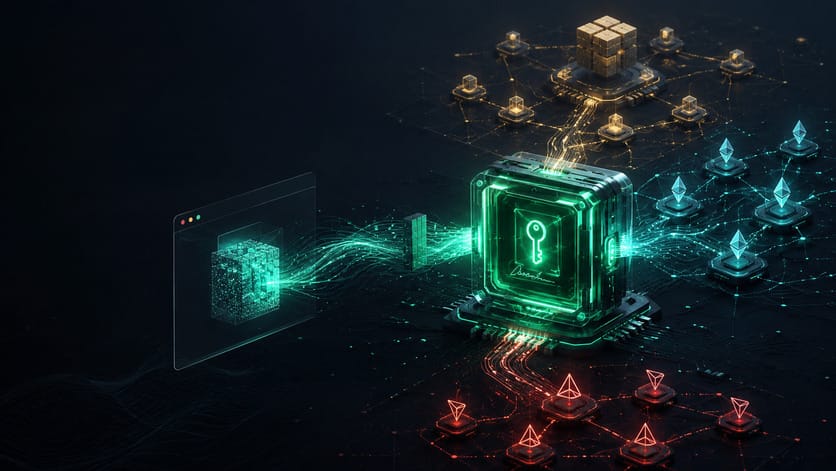
The Komodo DeFi Framework (KDF) offers a plug-and-play backend for developers building non-custodial wallets, decentralized exchanges, and crypto-native applications.
If you’ve been following the Komodo ecosystem, you’ve likely heard a lot about its flagship products. Many of you have probably taken Komodo Wallet (recently rebranded as Gleec Wallet) for a spin. User experiences always vary - some traders love its decentralized exchange (DEX) capabilities and use it daily, while others might have bounced off an early interface. But regardless of your personal experience with the app, few users stop to ask what’s actually running "under the hood."
To understand how Gleec Wallet works, it helps to know that its frontend (user interface) and backend (core infrastructure) have always been managed by two distinct development teams.
The Gleec Wallet frontend is built using Flutter, an open-source UI software development kit created by Google. Flutter uses the Dart programming language and allows developers to compile a single codebase into applications for desktop (Linux, Windows, macOS), mobile (Android, iOS), and the web.
The backend, however, is where the heavy lifting happens. Known as the Komodo DeFi Framework (KDF), this core engine is written in Rust. Rust’s focus on safety and performance makes KDF inherently cross-platform. Crucially, because Rust can be compiled into WebAssembly (WASM) - a binary instruction format that runs at near-native speed in web browsers - KDF can operate entirely client-side without needing a centralized server.
A Building Block for Web3 Developers
Today, let's look at what KDF offers developers. At its core, KDF is a modular building block. You can use it as the foundation for creating wallets, Web3 applications, or any software that needs to interact with cryptocurrency networks.
For instance, KDF natively supports UTXO-based coins (like Bitcoin and its derivatives) by connecting directly to Remote Procedure Call (RPC) nodes or Electrum servers. This means you can build a fully functional wallet, a crypto faucet, a blockchain-based game, or an e-commerce platform without needing to dive into the deep technical weeds of blockchain architecture.
Imagine you’re building a game and want to reward players with crypto. Instead of building a custom backend from scratch, you can plug KDF into official Electrum servers. Using basic API methods like withdraw and send_raw_transaction, your game can seamlessly route rewards to a player’s address.
Alternatively, you could build an application that monitors a specific wallet address for incoming transactions. When a payment hits the address, the app could automatically trigger the release of digital goods. In this scenario, KDF acts as a lightweight, decentralized payment processor for an online store. The use cases are limited only by a developer's imagination.
From Concept to MVP in One Day
To demonstrate how efficient development with KDF can be, I decided to build a React-based web wallet supporting KMD (Komodo), KMDCL (Komodo Classic), and ARRR (Pirate Chain).
By leveraging AI assistance, I went from concept to a functional, decent-looking Minimum Viable Product (MVP) in about a day. You can test the live version of the wallet at wallet.decker.im and review the open-source code on GitHub.
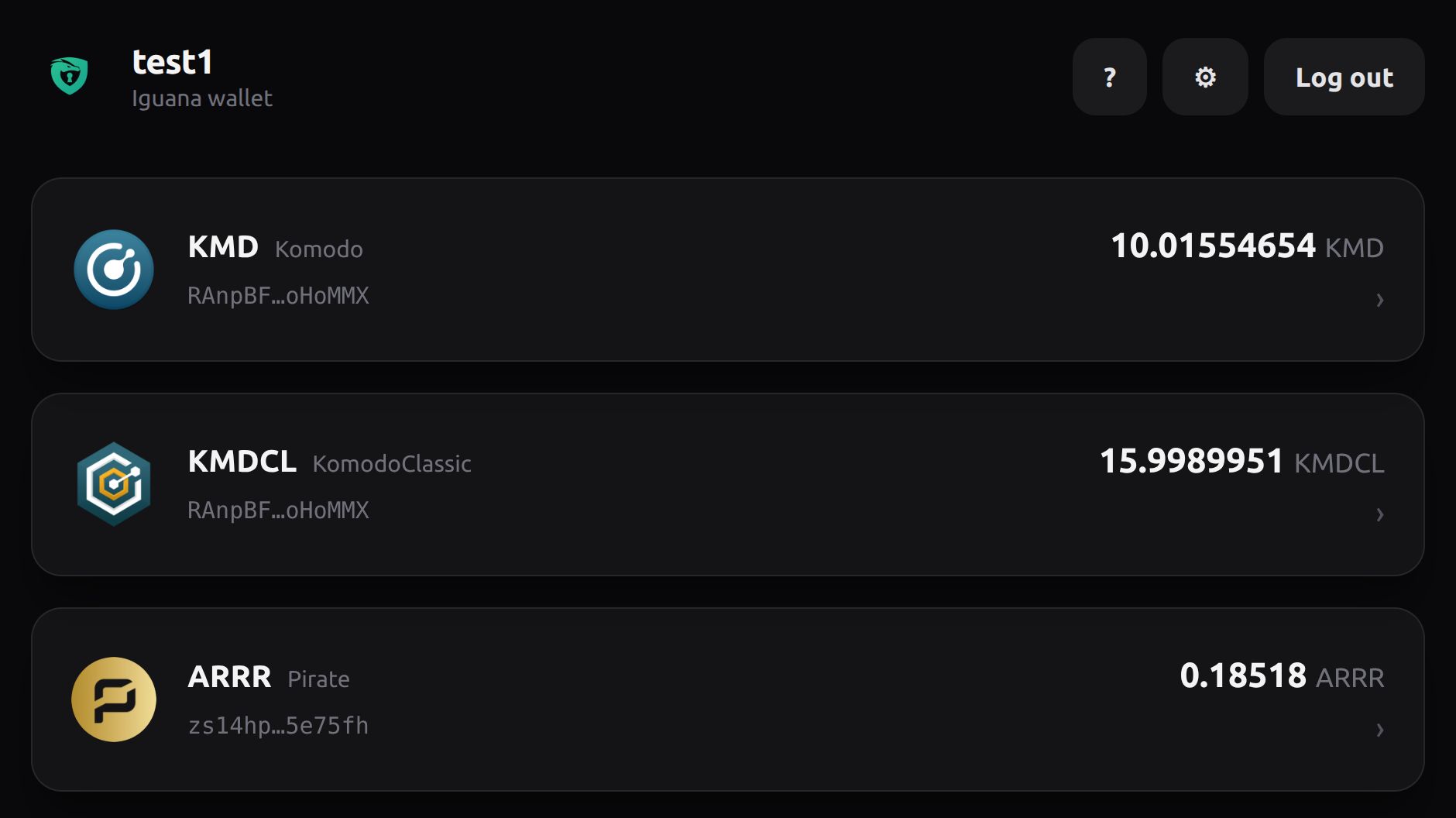
It is important to highlight that this wallet is completely non-custodial. Because KDF is compiled to WASM, the entire application runs locally inside your web browser. There is no centralized server processing your data. All sensitive operations - including the storage of private keys and the signing of transactions - happen strictly on your device. The only data broadcast to the public internet are the fully signed transactions, which are routed through public Electrum servers. You retain total, continuous control over your assets.
Expanding Beyond UTXO
While Komodo’s roots are in the UTXO model, KDF is not limited to Bitcoin-like chains. The framework also supports EVM-compatible blockchains, ERC-20 tokens, and, following recent updates, the Tron network (TRX) and TRC-20 tokens.
For developers looking to explore the codebase or integrate the framework into their own projects, the KDF source code is available on GitHub.
The Bottom Line
For years, the crypto industry has struggled with a persistent bottleneck: building secure, non-custodial infrastructure is difficult, expensive, and time-consuming. Frameworks like KDF change that equation. By providing a secure, Rust-based engine that handles the complexities of cross-chain communication and transaction signing, Gleec (Komodo) is quietly supplying the picks and shovels for the next wave of decentralized applications. Whether you are a solo developer prototyping a Web3 game or an enterprise building a multi-chain wallet, KDF offers a streamlined path from idea to execution without compromising on decentralization.